

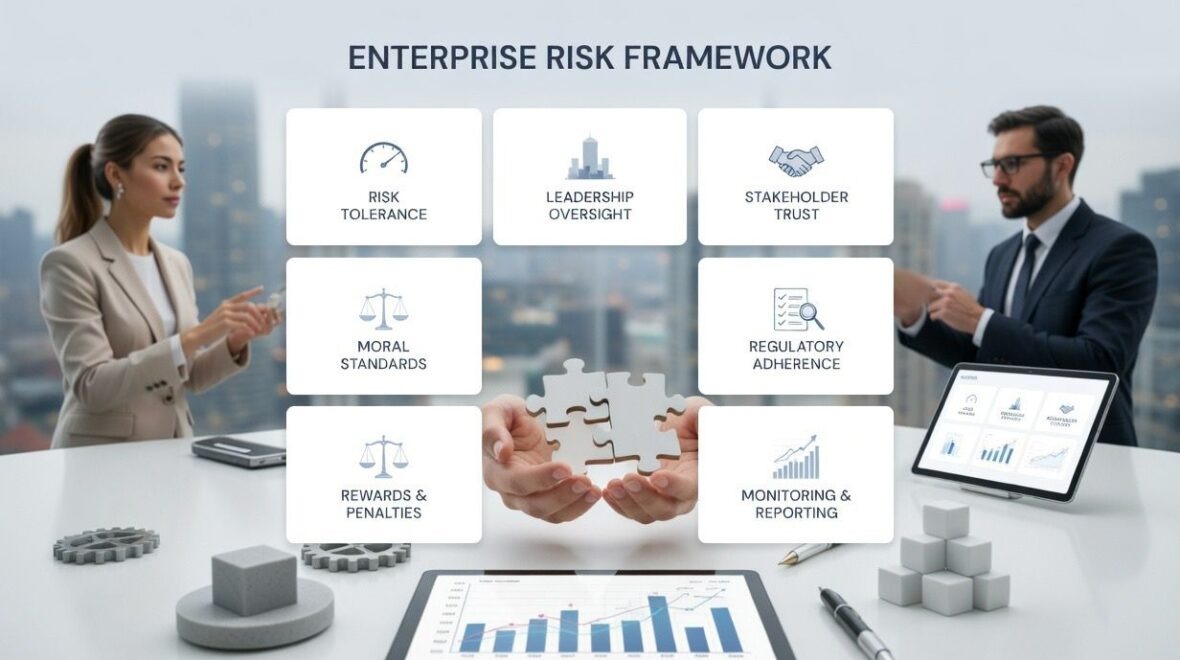
In the evolving landscape of financial services regulation, the distinction between a well-articulated risk appetite statement and a resilient risk culture often determines an institution’s fate. Today, my focus wassharpened by a powerful peer-to-peer exchange that examined risk culture not as a soft concept, but as a tangible governance architecture. The conclusion is clear: #Riskculture is the structural alignment between appetite, authority, incentives, escalation discipline, and consequence management.
To examine this further, let us break down the core pillars that transform abstract values into executable, and examinable, governance.
1. From Tolerance to Threshold: The Operationalisation of Appetite
A risk appetite statement is merely a declaration until it is translated into behavioural thresholds. True governance is found in the mechanics of execution:
· Defined Approval Limits: Clear parameters that empower and restrain decision-making.
· Override Controls: Mechanisms that ensure deviations from policy are neither casual nor invisible.
· Structured Escalation Triggers: Pre-defined events that mandate immediate supervisory attention.
· Documented Dissent: Formalising the “challenge” function to ensure it is not just encouraged, but recorded.
When these elements are hardwired into committees, high-risk acceptance forums, and product approval processes, culture moves from a declaration of intent to a demonstrable act of execution.
2. Accountability: The Architecture of Resilience
Institutional resilience is a direct product of its accountability architecture. A mature culture is one where ambiguity is eliminated through a clear delineation of responsibilities across the 1st, 2nd, and 3rd Lines of Defence (1/2/3LOD).
Cultural maturity is reflected in the ability to identify decision owners, document the closure of #audit and #regulatory findings, and ensure transparent follow-through. Where ownership is blurred, risk culture inevitably deteriorates.
3. The Calculus of Conduct: Incentives and Consequences
Incentive structures are the most potent levers of behavioural engineering. They shape outcomes far more effectively than any mission statement. This includes:
· Variable Remuneration Frameworks: Aligning pay with prudent risk-taking.
· Malus & Clawback Triggers: Ensuring accountability extends beyond the bonus payment date.
· Deferral Mechanisms: Aligning reward horizons with risk horizons.
· Consistent Disciplinary Application: Demonstrating that hierarchy is not a shield from consequences.
4. Escalation Discipline: The Evidence for Supervisors
The quality of an institution’s escalation discipline is now a primary source of supervisory evidence. Regulators are shifting their focus from “tone-from-the-top” messaging to the granular detail of governance logs.
Supervisory assessment now scrutinises the timeliness of escalation, the quality of documentation, the visibility of unresolved high-risk matters to the Board, and the formal treatment of dissent. In essence, they judge integrity by the velocity of remediation and the justification for overrides, not the rhetoric of the annual report.
5. Structural Independence: The Compliance Mandate
The independence of #Compliance is not a reporting line; it is a structural reality. It requires:
· Direct reporting lines to Board Committees.
· Protected budget processes to prevent “starving the guard.”
· Non-interference principles in decision-making.
· Formal challenge rights in strategic initiatives.
· Recorded disagreement protocols.
We must remember: independence without authority in the decision-making architecture remains purely symbolic.
6. Speak-Up as Critical Infrastructure
A #whistleblowing framework is not merely an employee relations tool; it is core risk infrastructure. Its robustness is measured by the existence of independent reporting channels, the rigorous tracking of retaliation, and the integration of case themes into enterprise risk assessments. Supervisory dialogue now routinely includes a review of how retaliation is handled, the timeliness of case closure, and the thematic recurrence of issues.
7. The Ultimate Barometer: Crisis Response
Ultimately, governance is tested not in calm waters, but in crisis. The true state of culture is revealed in how quickly issues are escalated, whether risk acceptances are revisited, whether commercial decisions are reversed under pressure, and whether accountability is applied consistently at the top.
Conclusion
Risk culture is not an intangible ethos. It is the operational coherence between what an institution states, what it documents, and how it acts when faced with risk. It is measurable, reviewable, and increasingly central to #supervisoryscrutiny.
As we navigate the complexities of #financialcrime and regulatory expectations, let us remember that robust culture is the ultimate control. It is the architecture that ensures resilience, integrity, and sustainable performance.
#Leadership #Governance #RiskManagement #Compliance #Banking #FinancialServices #InternalAudit #Legal