Across Africa, regulated gambling operators continue to invest in licensing, compliance and player protection frameworks, yet a significant share of gambling activity on the continent still happens outside these systems. Illegal and unlicensed platforms remain one of the most persistent challenges facing regulators, operators and, most importantly, players themselves.
It is worth asking why the black market continues to grow even as regulated markets mature. In many jurisdictions, licensing processes are slow, tax structures on regulated operators can be steep, and enforcement against unlicensed platforms is inconsistent. Players are often drawn to unregulated sites by promises of better odds, fewer restrictions and easier access, without understanding what they are giving up in the process. This gap between regulatory intent and market reality is where the real cost of illegal gambling begins to show.
What players lose on unlicensed platforms
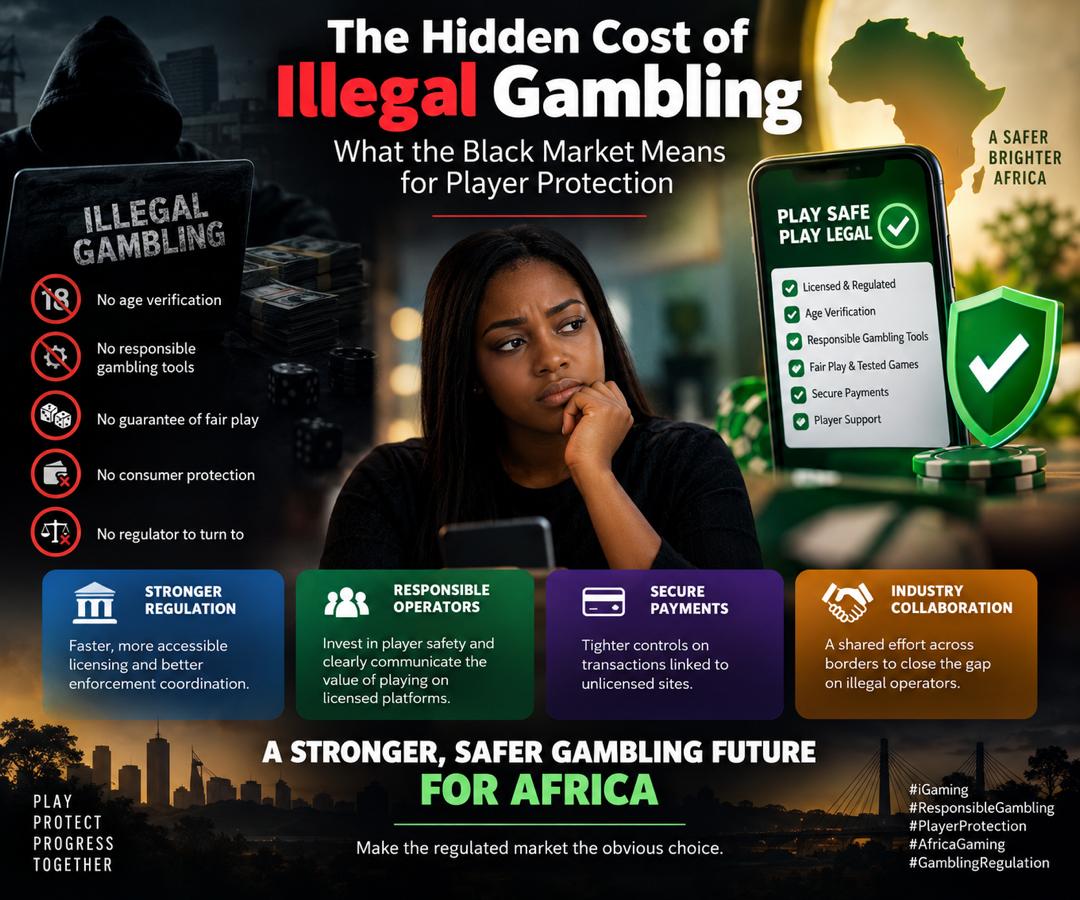
When a player moves from a licensed operator to an unregulated one, they lose access to protections that are easy to overlook until something goes wrong. Age verification checks, which exist to keep minors out of gambling environments, are frequently absent or poorly enforced. Responsible gambling tools such as deposit limits, self-exclusion and affordability checks simply do not exist on many black market platforms. Fair play cannot be guaranteed where there is no independent testing of games or oversight of odds. Payments made to unlicensed sites often carry no consumer protection, leaving players with little recourse if funds are withheld or accounts are frozen. And when disputes arise, there is no regulator or ombudsman to turn to.
These are not abstract risks. They represent real harm to real people, and they are the direct consequence of gambling activity moving into spaces without oversight.
Is enforcement keeping pace?
Regulators across the continent have made genuine progress in building licensing frameworks, but enforcement against illegal operators has not always kept pace with the growth of the black market. Unlicensed platforms are often based offshore, accept payments through channels that are difficult to trace, and can rebrand quickly once flagged. This makes it difficult for any single regulator to act alone. It also raises a fair question for the industry to sit with: are current regulatory and enforcement measures actually closing the gap, or are they simply pushing illegal activity further into channels that are even harder to monitor?
A shared responsibility
Addressing this problem cannot rest with regulators alone. Operators, payment providers, technology partners and responsible gambling advocates all have a role to play in strengthening player protection. Regulators can improve enforcement coordination and make licensing more accessible without compromising standards. Operators can invest more visibly in player safety and make the value of playing on a licensed platform clear rather than assumed. Payment providers can tighten controls around transactions linked to unlicensed sites. And industry bodies can continue building the kind of collaboration across borders that this problem genuinely requires, given how easily illegal platforms move across jurisdictions.
Making the regulated market the obvious choice
Ultimately, the most effective way to reduce the appeal of the black market is to make the regulated alternative genuinely better for the player, not just legally required. That means faster, more accessible licensing pathways, competitive product offerings, and responsible gambling tools that are visible and easy to use rather than buried in terms and conditions. Enforcement will always matter, but enforcement alone will not solve a problem that is, at its core, about trust and accessibility.
Africa’s gambling industry is at a stage where the choices made now around regulation, enforcement and player protection will shape how sustainable and safe this market becomes over the next decade. Getting the balance right between firm enforcement, meaningful responsible gambling practices and a regulated market that players actually want to use is not a simple task, but it is the work that matters most.
The cost of illegal gambling is not paid by operators or regulators. It is paid by players, often quietly and without recourse. That alone should be reason enough for everyone in this industry to take the black market seriously.
#iGaming #ResponsibleGambling #PlayerProtection #AfricaGaming #GamblingRegulation